
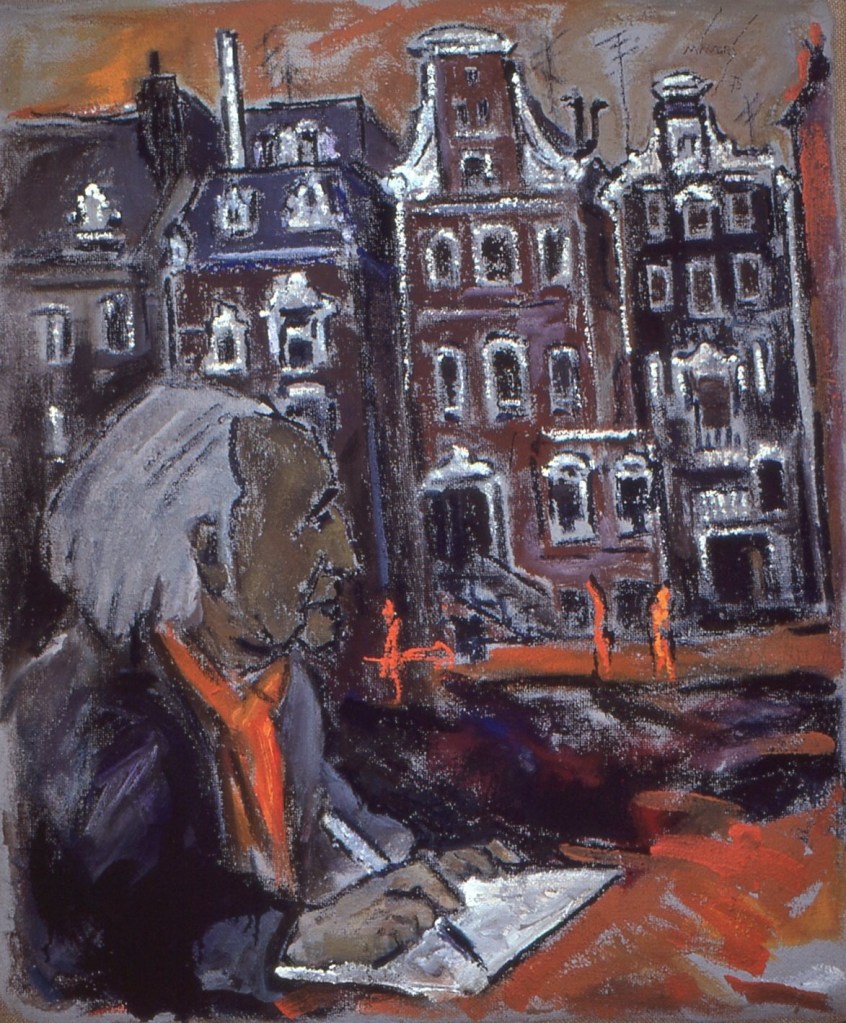
Alfred Mavers, Self-Portrait, 1975 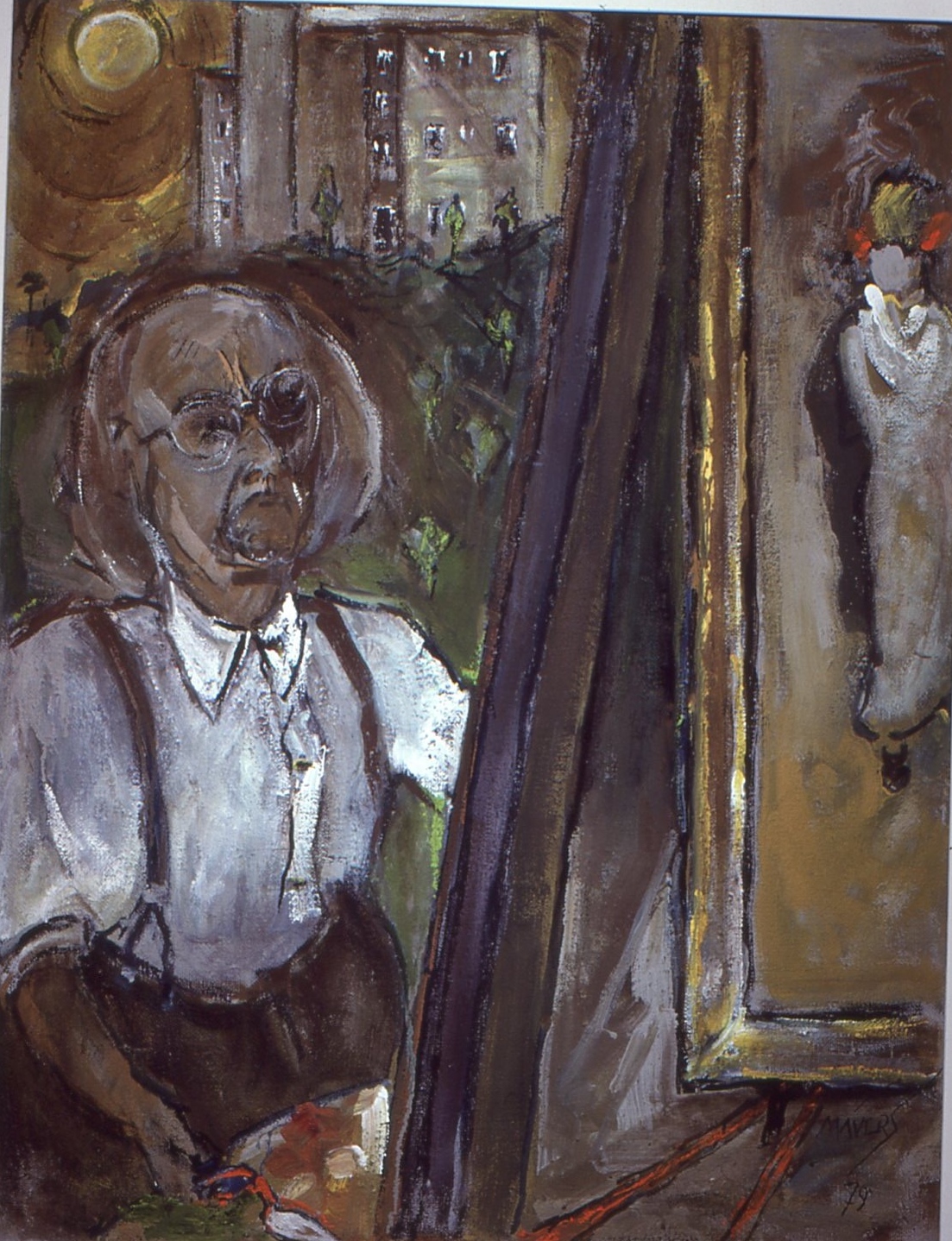
Alfred Mavers, Self-Portrait, 1979
Alfred Mavers was born in Lehrte, Germany on September 20, 1903. His father owned a house painting business and Alfred as the oldest son was expected to be involved. But from an early age Alfred showed a gift for art. In 1918 at the age of fifteen, he began studying art at the School of Applied Arts in Hannover. His professors soon discovered his talent for colour and composition and encouraged him to exhibit some of his early work at the Hannover Kunstverein (Society for the Promotion of the Fine Arts), which he did on a regular basis between 1922 and 1926.
Alfred had decided to devote his life to art. “Wenn ich male fuhle ich mich frei!” (When I paint I feel free). Art was his greatest passion in life. Through his participation in exhibitions at the Hannover Kunstverein he began to acquire patrons. One of the greatest admirers of his work was Dr. Seligman, the President of the rubber giant, Continental A.G. The 1920s and early 1930s were a time of artistic growth for Alfred. In addition to painting, he also experimented with photography as a medium.
Alfred was influenced by Emil Nolde, Ernst Ludwig Kirchner and Karl Schmidt-Rottluff, German Expressionist painters who founded “Die Brucke” (The Bridge) movement. Alfred tried many styles but eventually found himself as an Expressionist painter with occasional undertones of Impressionism. Everything inspired him, nature, urban life and people.
Unfortunately, Expressionism was one of the “Degenerate” styles of art that the Nazi regime disapproved of. When the Third Reich came to power in the 1930s, Alfred had little opportunity to exhibit his art, although he continued to paint. To support himself he worked in the family business. During the Second World War, Alfred was conscripted as a sign painter and did general maintenance in an ammunition factory. He was also asked to paint the portraits of officers.
After the end of the War, times were difficult in Germany and Alfred was focused on survival. His time was spent trying to obtain food, shelter and art supplies. By the 1950s the economy improved and Alfred started to exhibit his work again. He was particularly productive in the 1960s and 1970s creating thousands of paintings.
In the late 1960s Alfred learned that his beloved wife and best friend Kathe was dying of cancer. For more than two years he watched helplessly as she suffered. Kathe died on July 15, 1972.
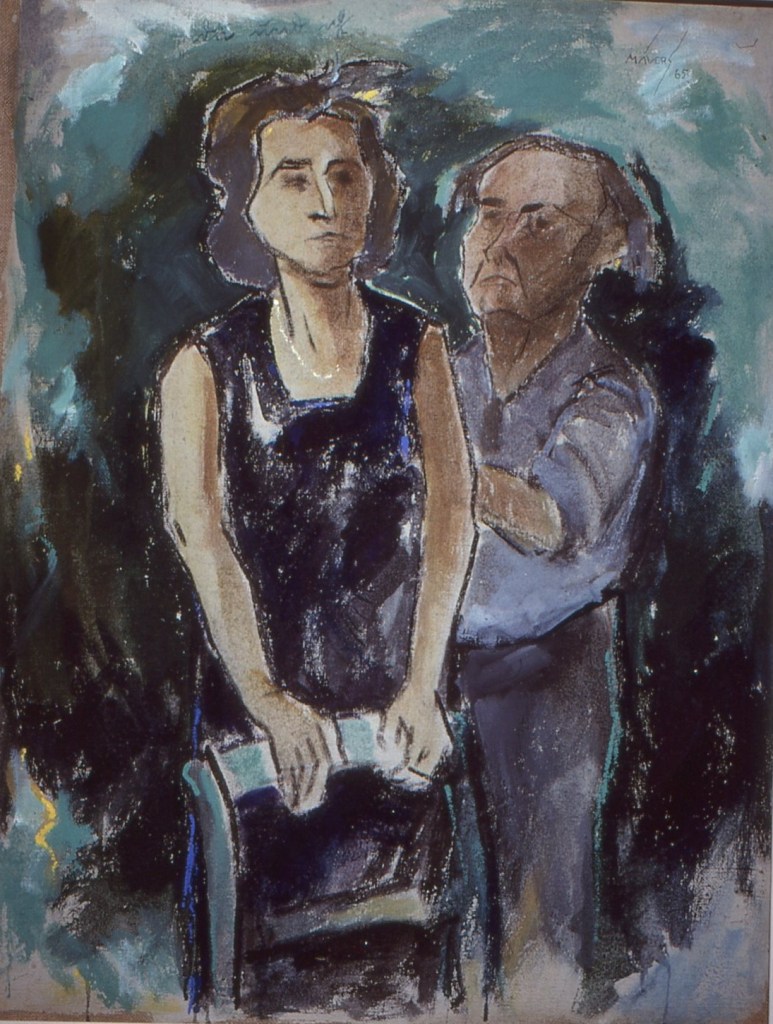
Alfred and Kathe, 1965 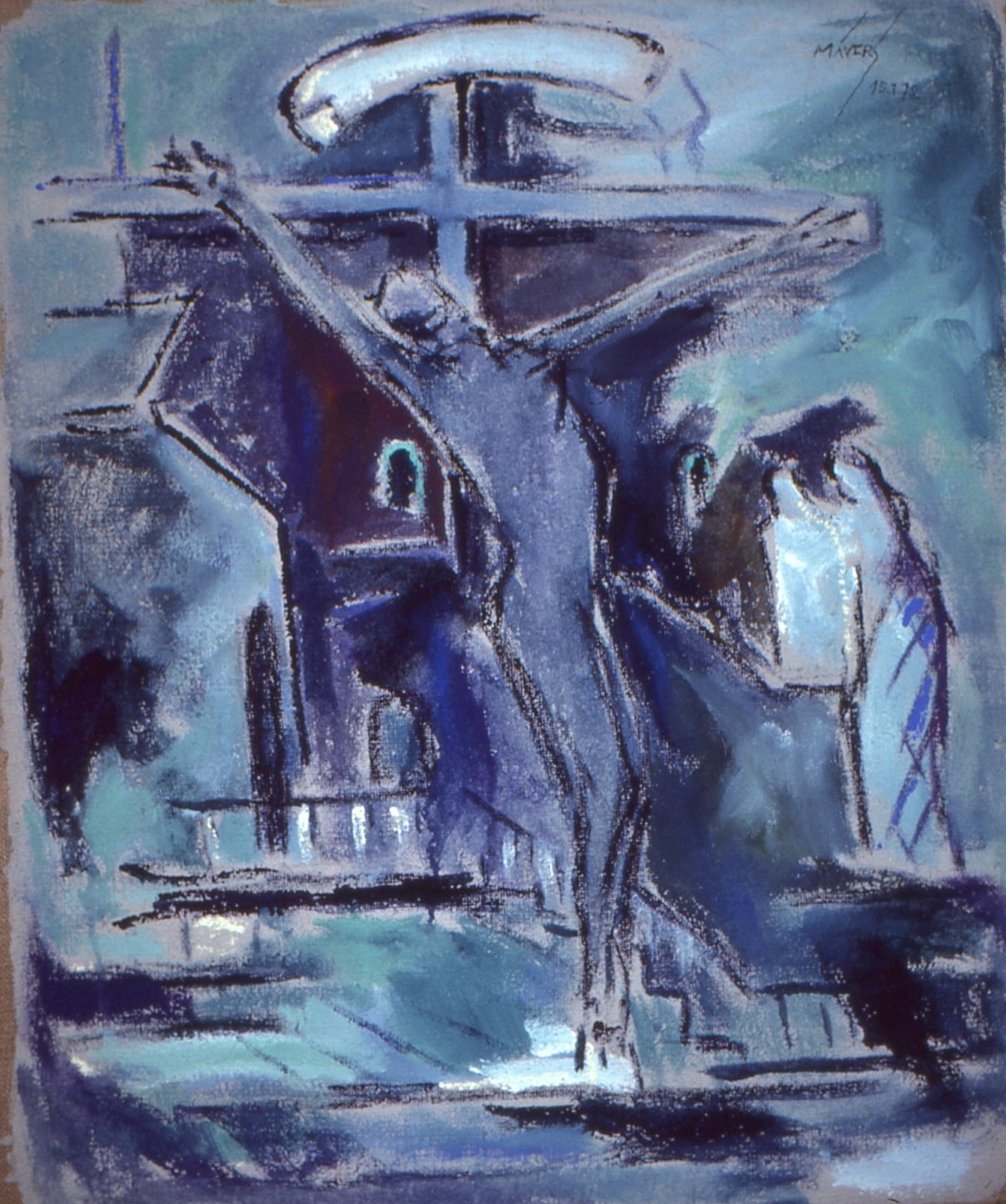
Kathe Dies, 1972
After the death of Kathe, Alfred surrounded himself with people and traveled widely, including to Italy, Holland and Spain. He painted incessantly in a style that became more and more impressive. Alfred continued to paint until his death on March 6, 1982 at the age of 78.
Two posthumous exhibitions have been held in Alfred’s honour. A retrospective of Alfred’s work was shown on the occasion of his 90th birthday in the Stadtische Galerie in Lehrte in 1993. More recently in 2013, an exhibition of Alfred’s early photographs from the 1920s and 1930s was exhibited at the Stadtische Galerie Lehrte.
 Alfred Mavers Art